@Faculty - 국제대학원
@Faculty
- @People
- @Faculty
@People
Our Faculty
Our faculty are leading scholars and dedicated mentors committed to cultivating a collaborative and intellectually vibrant environment.
With extensive connections to international organizations, government agencies, and global research networks, HYU GSIS faculty members integrate real-world perspectives into their teaching, blending academic rigor with practical expertise.
Whether you are pursuing advanced research, addressing pressing global issues, or exploring interdisciplinary approaches, our faculty are here to guide, inspire, and support your academic growth throughout your journey at GSIS.
Full-time faculty
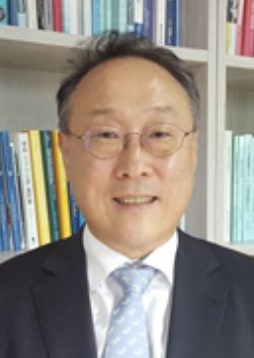
Ph.D. in Political Science, Purdue University
Present Position
- Dean, Graduate School of Int’l Studies & School of Int’l Studies
- Director, Hanyang Institute for Energy & the Environment (HY-IEE)
- Professor, Division of International Studies, Hanyang University (March 2004-Present) Founder and Director, The Global Circular Economy Center
Research Interest
- International energy politics and political/economic problems of resource-rich countries.
Education
- Ph.D. Political Science, Purdue University (Dec. 2000)
- Advisor: Rolf H.W. Theen
- Thesis: Building State Capacity in Russia: A Case Study of Energy Sector Reform, 1992-98
- MALD. Fletcher School of Law & Diplomacy, Tufts University (1996)
- B.A. Russian Language and Literature, Seoul National University (Feb.1988)
Awards
- 2018. Ministry of Education Award, Excellence in Research, Republic of Korea.
- 2015. Fast-Track Promotion to Full Professor, Excellence in Research. Hanyang University
- 2005. Best Teacher Award. Hanyang University
Publications Books
- Younkyoo Kim. 2023. The Circular Economy of Electric Vehicle Battery.
- Younkyoo Kim. 2022. Rich China, Poor America: Economic Security of Rare Earth Elements.
Research Articles
- Younkyoo Kim. 2023. US-China Electric Vehicle Battery Competition and the Role of South Korea, NBR Roundtable for Congressional Affairs, December 2023.
- Younkyoo Kim and Stephen Blank. 2019. “Russia and the Mediterranean in the Era of a New Cold War: Russia’s New Naval Challenges to the West.” Mediterranean Politics. Submitted and under review.
- Younkyoo Kim and Stephen Blank. 2019. “Russian Arms Sales Policy after the Ukraine Sanctions.” Asian Politics & Policy. 11(3).
- Younkyoo Kim. 2019. “Obstacles to the Creation of Gas Trading Hubs and a Price Index in Northeast Asia.” Geosystem Engineering, 22(2), pp. 59-71.
Research Reports
- Younkyoo Kim. 2024. “US-China EV Battery Competition and the Role of South Korea,” EIRP US-Korea Energy Series, Working Paper No. 4, May 6, 2024.
- Younkyoo Kim. 2024. “The Restructuring of the Global EV Battery Supply Chain and Critical Minerals,” East Asian Institute, March, 2024.
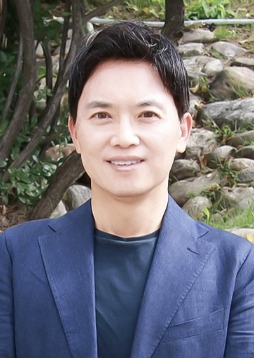
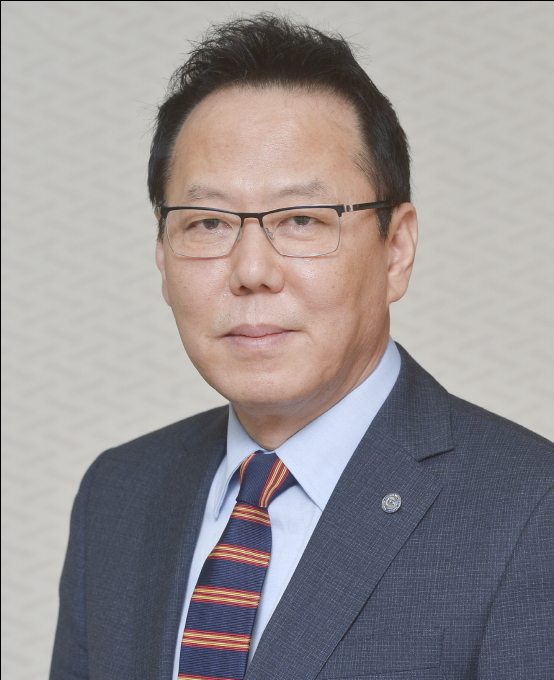
Ph.D. in Management, London School of Economics
Profile
Professor Joo Han Ryoo, currently serving as a faculty member in the Department of International Studies at Hanyang University, graduated from New York University with a major in Business Administration and a minor in Economics. He earned his Ph.D. in Management from the London School of Economics (LSE).
His main research areas include international market entry, competitive strategy, strategic alliances, mergers and acquisitions (M&A), post-merger integration strategies, and venture management. As of 2015, he has published nine papers in domestic journals and nine in international journals.
He is an active member of the Association of International Business (AIB) and serves as an editorial board member for Asia Pacific Business Review (UK), East-West Studies (Korea), and Dispute Resolution Studies (Korea). He has also contributed approximately 75 articles to major publications such as The Dong-A Ilbo, Dong-A Business Review (DBR), and Harvard Business Review Korea.
Education
1993: B.S. in Business Administration, New York University
1997: M.A. in Media Studies, New York University
1999: M.B.A., M.Phil. in International Business, University of London
2005: Ph.D. in Management, London School of Economics
Professional Experience
Mar. 2009 – Present: Professor, Department of International Studies, Hanyang University
Feb. 2008 – Feb. 2009: Ministry of Foreign Affairs and Trade (Spokesperson’s Office) / Institute for Dispute Resolution, Dankook University
Aug. 2005 – Jan. 2008: Strategic Planning Team, Samsung Electronics
Research Interests
International market entry, new business development, strategic alliances, mergers and acquisitions, post-merger integration, venture management, and new climate strategies
Selected Publications
Ryoo, J. (2021), “The evolution of FinTech Industry: The role of interaction between disruptive innovation and ecosystem,” Advances in Mathematics: Scientific Journal, 10(2), 1095–1118.
Ryoo, J. (2019), “Partnering integration: Getting more value from your international acquisition,” Organizational Dynamics, 48(3), 1–15.
Ryoo, J. (2018), “Acquiring strategic assets through international M&A: Proposal of a new integration approach,” Global and Stochastic Analysis, 5(6), 45–63.
Ryoo, J. & Kim, C. (2018), “Factors affecting consumers' repurchase intention in internet shopping,” Far East Journal of Electronics and Communications, 18(4), 587–629.
Ryoo, J. (2017), “Choosing between internal and external development for innovation projects: Antecedents and consequences,” Asia Pacific Business Review, 23(1), 90–115.
Ryoo, J. (2017), “The determinants of international acquisition performance in Korea: The impact of knowledge transfer, organizational cultural differences, and strategic fit,” Korean Journal of Business Administration, 30(11), 1907–1933.
Ryoo, J. (2016), “The success factor of post-merger integration strategy: In search of the Korean model and suggestions,” Dispute Resolution Journal, 14(1), 69–101. (In Korean)
Ryoo, J. (2015), “Identifying the moderating role of entrepreneurial orientation in the innovation uncertainty–collaborative technology development relationship: Findings from Korean high-tech firms,” International Journal of Global Management Studies Professional, 6(1), 18–36.
Additional papers listed from 2013–2012 on firm cooperation, boundary decisions, and technology sourcing strategy.
Awards
2010: Excellence in Teaching Award, Hanyang University
Professional Memberships and Editorial Activity
Full Member, Association of International Business (AIB)
Editorial Board, Asia Pacific Business Review (UK)
Editorial Board, East-West Studies (Korea)
Editorial Board, Dispute Resolution Studies (Korea)
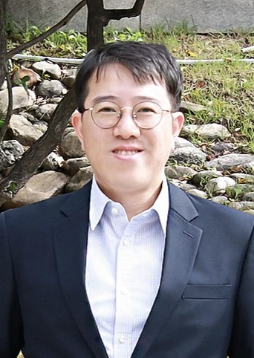
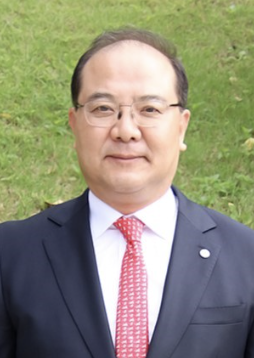
Ph.D. in International History, London School of Economics
Education (학력)
- Ph. D, London School of Economics, International History
- Thesis title: "The Foreign Policy of Park Chunghee, 1968-79." - Master of Pacific International Affairs, University of California, San Diego (UCSD), IR/PS
- B.A, Pusan National University, Business Administration and International Studies
Fields of Interest (연구관심분야)
- International Security, Indo-Pacific International Relations, Nuclear Security, U.S. Foreign Policy, Diplomatic History
Experience (경력)
- Korea Military Academy, Republic of Korea Army, Associate Professor
- Korea Military Academy, Republic of Korea Army, Assistant Professor
- Hankuk University of Foreign Studies, Part-time Lecturer
- Postdoc Fellow, University of Southern California
Recent Publications (최근논문)
- Peer-reviewed Articles (SSCI & A&HCI)
- Lyong Choi and Sang-hoon Lee, “Forced Self-reliance: The Defense Strategy of the Kamakura Bakufu against the Mongol Invasion of Japan,” Interdisciplinary History, September 2021, Vol. 52, Issue 2, pp. 177-196.
- Lyong Choi, “Reluctant Reconciliation: South Korea’s Tentative Détente with North Korea in the Nixon Era, 1969- 72,” Modern Asian Studies, January 2020, Vol. 54, Issue 1, pp. 59-94.
- Lyong Choi, Jong-dae Shin, and Han-hyung Lee, “The Dilemma of the “Axis of Evil”: The Rise and Fall of Iran-DPRK Relations,” Korean Journal of Defense Analysis, Vol. 31, No. 4, December 2019, 595-611
- Lyong Choi and Il-young Jeong, “North Korea and Zimbabwe, 1978–1982: from the strategic alliance to the symbolic comradeship between Kim Il Sung and Robert Mugabe,” November 2017, Cold War History, Vol. 17, Issue 4, pp. 329-349
- Lyong Choi, “Human Rights, Popular Protest and Jimmy Carter’s Plan to Withdraw U.S. Troops from South Korea,” Diplomatic History, November 2017, Vol. 41, Issue 5, pp. 933–958.
- Lyong Choi and Jong-dae Shin, “Enemy of My Ally Is Not My Enemy: ROK-US Alliance and ROK-Iran Relations,” Asian Perspective, July-September 2017, Vol. 41, No. 3, pp. 403-429.
- Jaeho Hwang and Lyong Choi, “Re-thinking Normalization between ROK and PRC in the Early 1990s: The South Korean Perspective,” Cold War History, December May, Vol.15, Issue 4, pp. 557-578.
- Lyong Choi, “The First Nuclear Crisis in the Korean Peninsula, 1975- 76,” Journal of Cold War History, March 2014, Vol. 2014, Issue 1, pp. 1-20.
Peer-reviewed Articles (KCI)
- Lyong Choi, “Reconsidering the Diplomatic History by Theory of Asymmetric Combined Forces: Analysis on Silla-Tang,Goryeo-Mongol(Yuan), and Joseon-Ming Relations,” Korean Journal of Military Art and Science, Feb 2020, Vol. 76, Issue 2, pp. 217- 234.
- yong Choi, “The Nuclear Proliferation Puzzle from North Korea: Nuclear Development through Technology Exchanges,” Yonsei Journal of Unification Studies, May 2018, Vol. 22, Issue 1, pp. 39-70.
- Lyong Choi, “From the War of Rationality to the War of Legitimacy: Black and White Conflict in the 1970s’ Southern Africa and Change in U.S. Third World Policy,” May, 2018, Journal of Western History, Vol. 58, Issue 0, pp. 103-128.
- Jeong Ilyeong and Lyong Choi, “The China Dilemma of The USA and State Normalization of Japan,” Yonsei Journal of Korean Unification Studies, pp. 5- 31. Vol. 19, No. 2, 2015.
Book chapter
- Lyong Choi, “The Bluff and Bluster: South Korea’s Nuclear Project and ROK-US Relations in 1970s ,” Nuclear Latency and Hedging: Concepts, History, and Issues (Washington D.C: Woodrow Wilson Center, 2020) https://www.wilsoncenter.org/book/nuclear-latency-and-hedging-concepts-history-and-issues
Book translation
- The History of World, written by J. M. Roberts and O. A. Westad
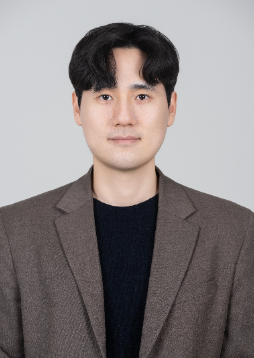
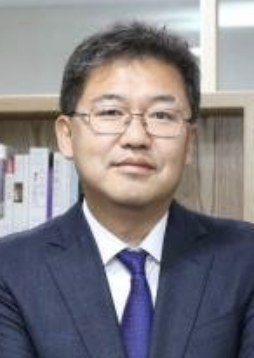
Ph.D. in Political Science, Boston University
Position: Assistant Professor
Research Interest: International Political Economy, Politics of Finance, Developmental States, Korean Political Economy, Comparative Political Economy of East Asia
Education
Ph.D. Boston University, Political Science 2023.8
M.A. Peking University, International Relations 2019.7
B.A. Waseda University, Economics 2017.9
Experience
Hanyang University, Assistant Professor 2025.3 - Present
Ritsumeikan Asia Pacific University, Associate Professor 2023.10 - 2025.2
Peer-reviewed Publications
Lee, Y., Grimes, W.W. 2025. “From contest to convergence in East Asia: why do regional challengers end up resembling incumbent institutions?” at Pacific Review, Online First. (SSCI)
Lee, Y., Katada, S.N. 2024. “Regional Approach to Financial Statecraft: Japan and India in the Face of Rising China” at Geopolitics, Online First. (SSCI)
Lee, Y. 2024. “Financial Liberalization or State Capitalism? The Developmental State and the Special Purpose Bond Market in South Korea” at Contemporary Politics, Online First. (SSCI)
Lee, Y., Grimes, W.W., Kring, N.W. 2024. “The varieties of financial statecraft and middle powers: assessing South Korea’s strategic involvement in regional financial cooperation” The Pacific Review, Online First. (SSCI)
Grimes, W.W., Lee, Y. Kring, N.W. 2023. “Financial cooperation in the Asia-Pacific as regime complex: explaining patterns of coverage, membership, and rules” International Relations of the Asia-Pacific, Online First. (SSCI)
Lee, Y., Grimes, W.W. 2023. “Manifesting the embedded developmental state: the role of South Korea’s National Pension Service in managing financial crisis” Review of International Political Economy, 30(5): 1933-1956. (SSCI)
Lee, Y. 2021. “Riding the tide: assessing South Korea’s hedging strategy through regional security initiatives” The Pacific Review, 36(3): 494-520. (SSCI)
Lee, Y.. 2018. “Economic Interdependence and Peace: a Case Comparison Between the US-China and US-Japan Trade Disputes” East Asia, 35: 215-232.
Lee, Y.. 2018. ”What Brought Them Together? Comparative Analysis of the Normalization Processes of North Korea-Japan and South Korea-Japan” The Korean Journal of International Studies, 21(3): 411-433.
Book Chapters
Lee, Y., Kring, N.W. 2024. “Regional Financial Cooperation and Regional Financial Arrangement” in Edward Elgar Handbook on Regional Cooperation and Integration, 123-142.
Policy Papers
Lee, Y., Grimes, W.W. “Assessing South Korea’s Role in Promoting ESG Investing in the Asia-Pacific” Korea Economic Institute of America
Lee, Y. “Legitimate Containment: How the ROK-US Reciprocal Defense Procurement can Legitimately Balance China’s Military Influence in the South China Sea” Issues and Insights 23(5): 37-47
Working Papers
Lee, Y., Katada, S.N. “Shaping Financial Markets in Asia: Geoeconomics of Regional Foreign Aid by Japan and South Korea” Under Review as part of a special issue for International Affairs
Lee, Y., Grimes, W.W. “From contest to convergence: Why Do Regional Challengers End Up Resembling Incumbent Institutions?” Under Review
Lee, Y., Grimes, W.W. “How Developmental Legacies Foster State Financialization: Evidence From Social Bond Markets in Japan and South Korea”
Feng, B., Lee, Y. “The Political Spillovers of US Quantitative Easing”
Lee, Y., Musthaqh, F. “Institutional arrangements for patient capital formation: The role of state guarantees and financial repression in the formation of patient capital in India and South Korea”
Gotoh, F., Lee, Y., Yu W.V. “Green Finance and development banks in China, Japan, and Korea”
Lee, Y., Katada,S.N. “The hidden pillar of dollar dominance: Fed swaps and the Bank of Japan’s dollar financing operations”
Lee, Y., Grimes, W.W. “Pension Funds in Japan and Korea: Industrial Policy in the ”Post-Developmentalist” Era”
Lee, Y. “The Political Repercussions of Inclusion and Exclusion in the Federal Reserve Currency Swap Line Network on Financial Cooperation”
Lee, Y., Kring, W.N., Chin, G.T., and Gallagher, K. “China and the International Economic Order: an Empirical-based Approach”
Lee, Y., Grimes, W.W., Kring, W.N. “Nested Outgrowth: Complementing Regional Surveillance Under Limited Capacity”
Lee, Y., Grimes, W.W. “Developmental legacies and fintech industry development in Japan and South Korea”
Personal website
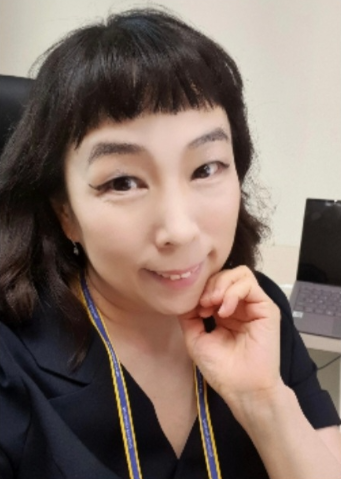
Ph.D. in Comparative Higher Education, University of London
Position: Professor
Research Interest
- Transnational academic mobility/migration, knowledge, and identity; intellectuals and political ideology, onto-epistemology
- Ethnic nationalism and internationalism, nation vs state, stateless nation, pariah
- Comparative historical sociology, comparative (higher) education, comparative and intercultural theory, East Asian Area studies (Korea, Japan, China, Malaysia, and Singapore)
- International relations, life history, biographical narrative research
- Social history of universities, public/private boundaries in higher education, university governance, the academic profession
Education
- Ph.D. in Comparative Higher Education, University of London, Institute of Education (now UCL IOE) (Dec. 1998) Supervisors: Professor Robert Cowen†; Professor Jagdish Gundara† Thesis: Forming the Academic Profession in East Asia: A Comparative Analysis (published as abook by Routledge in 2001; re-issued in 2018; 2020)
- MA in Comparative Education (Distinction on dissertation), University of London, Institute of Education (now UCL IOE) (Sept. 1992) Thesis: Korean Higher Education: an interpretation and a comparison
- BA in Education [summa cum laude] (Liberal Arts, non ITT; subsidiary subjects: Philosophy, History, Sociology, Psychology), Yonsei University, Seoul (Feb. 1991)
Current Posts
- Professor (full), Hanyang University, College of International Studies (CIS), Global Content Convergence (SGCC) | School of International Studies (SIS) | Graduate School of International Studies (GSIS), Korean Studies; College of Humanities, Dept. of History | Research Institute of Comparative History and Culture (RICH)
Previous Posts
- 2022-present: Visiting Professor, Yonsei University, Seoul, Korea
- 2020-present: Honorary Professor, University of East London, London, U.K.
- 2020-2022: Academic Visitor, St Antony’s College, Oxford
- 2013- 2020: (full) Professor of Comparative Higher Education; Founding Leader of Higher Education Research Group (HERG: www.uel.ac.uk/herg/leader); Chair of College Research Ethics Board; Chair of School Research Ethics Committee; Reader in Comparative Higher Education, Cass School of Education and Communities, University of East London (UEL)
- 2007-2013: Lecturer in Comparative Higher Education, Brunel University London
- 2002-2007: Research Lecturer in Critical Professional Education, Brunel University
- 2001-2002: Brain Korea 21 Contract Professor, Seoul National University (SNU), Seoul, Korea
- 2000-2001: Post-doc Visiting Scholar in International Relations, London School of Economics (LSE)
- 1999: Research Consultant, OECD CERI (Centre for Educational Research and Innovation), Paris
- 1993: Researcher, KEDI (Korean Education Development Institute), Seoul
Honorary Affiliations
- Honorary Professor, University of East London (UEL), in Lonon, UK
- Honorary Senior Research Fellow, University College London (UCL), IOE in London, UK
- Visiting Professor, Yonsei University in Seoul, Korea
Professional Appointments
- Vice President, Comparative Education Society in Europe (CESE) https://cese-europe.org/our-society/executive-committee (since 2022)
- QS Global Advisory Committee member (since 2022) https://qshesummits.com/blog/featured_speakers/professor-terri-kim/
- Editorial Board member of Comparative Education journal (Taylor & Francis journal, since May 2012-
present) https://www.tandfonline.com/journals/cced20/about-this-journal#editorial-board;
Guest Editor of the Special Issues of Comparative Education 52(1) in 2016; 56(1) in 2020. - Editorial Board member of Intercultural Education journal (Taylor & Francis journal) (since 2011 - present) https://www.tandfonline.com/journals/ceji20/about-this-journal#editorial-board; Guest Editor of the Special Issue of Intercultural Education journal 20(5) in 2009.
- Founding Editorial Board member of Policy Reviews in Higher Education (since July 2015, launched in 2016) https://www.tandfonline.com/journals/rprh20/about-this-journal#editorial-board
- Editorial Board member of Culture, Education and Future (journal published by the Association for the Advancement of Interdisciplinary Education Studies (AAIDES) (since 2024-present) https://journals.symphonypub.com/index.php/cef/about/editorialTeam
- International Advisory Board member of New Research - New Voices, Series Editor: Halla B.Holmarsdottir, Publisher: Brill (since 2024-present) https://brill.com/display/serial/NRNV?contents=about
Book
- Kim, T. (2020/2001) Forming the Academic Profession in East Asia: a Comparative Analysis, Routledge (originally published as The Routledge East Asia History, Politics, Sociology, Culture book series in 2001 ERIC - ED457803 - Forming the Academic Profession in East Asia: A Comparative Analysis. East Asia: History, Politics, Sociology, Culture. A Routledge Series., 2001 – re-issued as a part of the Routledge Library Editions in 2018; 2020) ISBN: 9781138316003, 358 Pages. Published April 29, 2020, by Routledge https://www.routledge.com/Forming-the-Academic-Professionin-East-Asia-A-Comparative-Analysis/Kim/p/book/9781138315945
Research Articles (indicative-out of 69 publications, including one book and five edited collections as journal Special Issues
Kim, T. and Bash, L. (2025). Interculturality Between Majority and Minority in the European
Context of Ethnic Nationalism, Chapter 5, pp. 57-72. In: Genkova, P., Flynn, M., Morley, M.,
Rašticová, M. (eds) Handbook of Diversity Competence. Springer Nature, Cham.
https://doi.org/10.1007/978-3-031-69308-3_5. Open Access.Choi, E. and Kim, T. (2024). ‘Internationalization of Korean Higher Education: A critical
appraisal of current practice’, Chapter 6, pp. 99-119. In Contrasting conceptions of
internationalization interculturally, edited by Fred Dervin, Routledge.
https://www.taylorfrancis.com/chapters/edit/10.4324/9781003567950-8/internationalization-korean-higher-education-edward-choi-terri-kim?context=ubx&refId=88647895-69c8-4703-99f1-924b76ea16edKim, T. (2023) ‘Knowledge and Identity on the Move: the three elements affecting
comparative education’, In Scuola Democratica Issue 3/2023, settembre-dicembre, Gli studi
comparativi in educazione: teorie, ricerche, insegnamento. Guest editors: Donatella
Palomba e Carlo Cappa, pp. 443-462. https://www.rivisteweb.it/doi/10.12828/112653Cowen, R. and Kim, T. (2023) ‘Comparative Education and Intercultural Education: Relations
and Revisions’ In Comparative Education 59(3) Special Issue: Comparative Education: Some
Futures?, edited by Robert Cowen. https://doi.org/10.1080/03050068.2023.2234690Kim, T. (2023) ‘How has Comparative Education research contributed to the
internationalization of education research and its academic societies under globalization?’ to
be published in the Special Issue of Comparative Education Bulletin of the Japan
Comparative Education Society 比較教育学研究第66号〔2023年〕 No. 66., pp. 124-140.
https://www.jstage.jst.go.jp/browse/jces1975/list/-char/enKim, T. (2023) ‘Korean ethnic nationalism and modern education: Christianity and political
ideologies in shaping one nation and two States’, Chapter 6, pp. 124-148 In Education,
Curriculum and Nation-Building. Contributions of Comparative Education to the
Understanding of Nations and Nationalism, edited by Daniel Tröhler (as Oxford Studies in
Comparative Education series), Routledge.https://www.taylorfrancis.com/chapters/edit/10.4324/9781003315988-7/korean-ethnic-nationalism-modern-education-terri-kimKim, T. (2022) ‘Transnational academic collaboration: a critical analysis of the global and
national contexts and constraints of co-authorship in The International Encyclopaedia of
Education Vol. One: Globalization and shifting geopolitics of education (4 th edition) edited by
Fazal Rizvi and Jason Beech, published by Elsevier. linkinghub.elsevier.com/retrieve/pii/B9780128186305010691Kim, T. and Bamberger, A. (2021) Diaspora, Ethnic (inter-)nationalism, and Higher Education:
the Korean and Jewish cases of internationalisation as a stateless nation in the early 20th
century In British Journal of Educational Studies 69(5) Special Issue: Diaspora and
Internationalisation in HE. Edited by Bamberger, A., Terri Kim, Morris, P., Rizvi, F.
https://www.tandfonline.com/doi/full/10.1080/00071005.2021.1929827Kim, T. (2021) ‘The positional identities of East Asian mobile academics in UK Higher
Education: a comparative analysis of internationalisation and equality and diversity’ Chapter
3, pp. 47-70. In Klerides, E. & Carney, S. (Eds.). Identities and education: Comparative
perspectives in times of crisis. London: Bloomsbury (*My CESE Conference paper (May 2018)
was selected by the CESE Executive Committee).
https://www.bloomsbury.com/uk/identities-and-education-9781350141315/Kim, T. (2020) ‘Diasporic Comparative Education: an Initial Tribute to Anxiety and Hope’ In
Comparative Education 56(1), 111-126 Special Issue: Biographies of Comparative Education:
Knowledge and Identity on the Move. Edited by Terri Kim. https://doi.org/10.1080/03050068.2020.1714328Kim, T. and Ng. W. (2019) Ticking the ‘Other’ Box: Positional identities of East Asian
academics in UK universities, internationalisation and diversification, Policy Reviews in
Higher Education 3(1), 94-119:
https://www.tandfonline.com/doi/full/10.1080/23322969.2018.1564886Kim, T. (2017) 'Internationalisation of Higher Education in South Korea: Reality, Rhetoric, and
Disparity in Academic Culture and Identities' In The Sage Sociology of Education Volume
Three: Equalities and Identities, The Sage Sociology of Education Four Volumes. Edited by
Jenny Ozga (University of Oxford) https://us.sagepub.com/en-us/nam/sociology-of-education/book247906#contents (Reprint from The Australian Journal of Education 49(1),
2005 https://journals.sagepub.com/doi/10.1177/000494410504900105Kim, T. (2017) Academic mobility, transnational identity capital, and stratification under
conditions of academic capitalism, Higher Education 73(6), 981-997:
https://link.springer.com/article/10.1007%2Fs10734-017-0118-0Kim, T. (2016) Internationalisation and Development in East Asian Higher Education: an
introduction, Comparative Education 52(1), 1-7. Special Issue: Internationalisation and
Development in East Asian Higher Education: Some Excitements and Errors. Edited by Terri
Kim. https://www.tandfonline.com/doi/full/10.1080/03050068.2016.1144309Kim, T. (2014) The intellect, mobility, and epistemic positioning in doing Comparisons and
Comparative Education, Comparative Education 50(1), 50 th Anniversary Special Issue, 58-
72: https://www.taylorfrancis.com/chapters/edit/10.4324/9781315722825-9/intellect-mobility-epistemic-positioning-comparisons-comparative-education-terri-kimKim, T. (2013) The (un)changing relationship between the State and Higher Education in
South Korea: some surprising continuities amid transition In Goodman, R., Kariya, T. and
Taylor, J. (Eds). The Changing Relationship between the State and Higher Education in
France, Germany, Italy, Japan, Korea and the UK, Oxford Studies in Comparative Education
Series, Symposium, pp. 235-260. http://www.symposium-books.co.uk/books/bookdetails.asp?bid=83Kim, T. (2011) Globalization and Higher Education in South Korea – towards ethnocentric
internationalization or global commercialization of higher education? In King, R.,
Marginson, S. and Naidoo, R. (Eds). Handbook of Globalization and Higher Education, pp.
286-305, Edward Elgar Publishing Ltd. (USA & UK; ISBN: 978 1 84844 585 7). https://www.elgaronline.com/display/edcoll/9781848445857/9781848445857.00027.xmlKim, T. (2010) Transnational Academic Mobility, Knowledge and Identity Capital, Discourse
31(5): 577-592. Special Issue: International Academic Mobility, edited by Johannah Fahey
and Jane Kenway. http://dx.doi.org/10.1080/01596306.2010.516939Kim, T. (2009) Transnational Academic Mobility, Internationalisation and Interculturality in
Higher Education, Intercultural Education 20(5): 395-405. Special Issue: Interculturality
and Higher Education. Edited by Terri Kim & Matthias Otten.
http://dx.doi.org/10.1080/14675980903371241Kim, T. (2009) ‘Shifting patterns of transnational academic mobility: A comparative and
historical approach’, Comparative Education 45(3): 387-403 Special Issue: Mobilities and
educational metamorphoses: patterns, puzzles, and possibilities, edited by Robert Cowen
and Eleftherios. Klerides http://dx.doi.org/10.1080/03050060903184957Kim, T. (2009) Confucianism, Modernities and Knowledge: China, South Korea, and Japan
(Chapter 55) In Cowen, R. and Kazamias, A. (Eds). The International Handbook of
Comparative Education, Springer, pp. 857-872.
https://link.springer.com/chapter/10.1007/978-1-4020-6403-6_55
Other Outputs (indicative)
- Kim, T. (2023) ‘Restructuring Universities, EDI and Conformity’, Emerald Publishing opinion and blog, 3 May 2023: https://www.emeraldgrouppublishing.com/opinion-and-blog/restructuring-universities-edi-and-conformity-a-view-comparative-distance. Miscellaneous commentary piece.
- Fook, J., Archibong, U., Kim, T. and Aldercotte, A. (2019) ‘Cracking the concrete ceiling: Tracking the impact of the Diversifying Leadership programme’, AdvanceHE, 16 May 2019. https://www.advance-he.ac.uk/knowledge-hub/cracking-concrete-ceiling-tracking-impact-diversifying-leadership-programme-full
- Kim, T. (2019) ‘East Asian academics in UK embrace idea of being foreign’ University World News, 20 April 2019 https://www.universityworldnews.com/post.php?story=20190414202658463. Commentary article.
- Kim, T. and Brooks, R. (2013) ‘Internationalisation, Mobile Academics, and Knowledge Creation in Universities: a Comparative Analysis’: https://srhe.ac.uk/wp-content/uploads/2020/03/TerriKimReport.pdf. SRHE Research Award 2011/12 Final Report.
- Kim, T. (2011) ‘EUROPE: Higher education amid financial meltdown’, University World News, 11 December 2011: https://www.universityworldnews.com/post.php?story=20111209194832765. Commentary article.
- Kim, T. and Locke, W. (2010) Transnational academic mobility and the academic profession In CHERI, Higher Education and Society: A Research Report, March 2010, Centre for Higher Education Research and Information (CHERI), The Open University, pp.25-34: https://oro.open.ac.uk/21282/1/Higher_Education_and_Society._Chapter_4_-_Transnational_academic_mobility.pdf
Web Links
- Google Scholar: https://scholar.google.co.uk/citations?user=nV2UPg8AAAAJ&hl=en
- ORCiD ID: https://orcid.org/0000-0001-7237-0682
- Academia.edu: https://hanyang.academia.edu/TerriKim
- ResearchGate: https://www.researchgate.net/profile/Terri-Kim-3
- Linkedin: https://www.linkedin.com/in/professor-terri-kim-a001169/
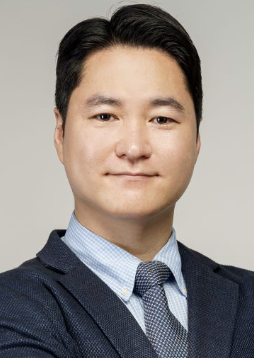
Ph.D. in Management, Seoul National University
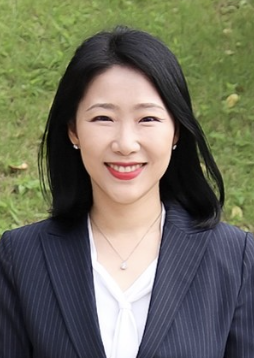
Ph.D. in International Studies, University of Tokyo
Education (학력)
- Ph.D. University of Tokyo, Japan, International Studies
- Thesis Title: “The Effects of Export Promotion Programs in Developing Countries: Evidence from Country and Firm Level Analyses.” - Master of International Studies. Seoul National University, Korea, International Cooperation
- Hon. B.A. University of Toronto, Canada, Economics and International Relations
Fields of Interest (연구 관심분야)
- International Trade, Development Economics, Impact Evaluation, Official Development Assistance
Experience (경력)
- The University of Tokyo, Assistant Professor
- Waseda University. Part-time Lecturer
- Tsukuba University, Part-time Lecturer
- Sophia University, Postdoctoral Researcher
- Waseda University, Junior Researcher
- Research Institute of Economy, Trade and Industry, Japan, Research Project Member
Working papers (international)
- 2018. Ministry of Education Award, Excellence in Research, Republic of Korea.
- 2015. Fast-Track Promotion to Full Professor, Excellence in Research. Hanyang University
- 2005. Best Teacher Award. Hanyang University
Publications Books
- Younkyoo Kim. 2023. The Circular Economy of Electric Vehicle Battery.
- Younkyoo Kim. 2022. Rich China, Poor America: Economic Security of Rare Earth Elements.
Recent Publications (최근논문)
Peer-reviewed
- Kim, Yu Ri, “Does Aid for Trade Diversify the Export Structure of Recipient Countries?” The World Economy. 2019; 42: 2684– 2722. https://doi.org/10.1111/twec.12845.
- Kim, Yu Ri, Yasuyuki Todo, Daichi Shimamoto, and Petr Matous, “Are Seminars on Export Promotion Effective? Evidence from a Randomized Controlled Trial.” The World Economy, 2018; 41: 2954– 2982. https://doi.org/10.1111/twec.12658 (Open Access)
Working Papers
- Shimamoto, Daichi, Yasuyuki Todo, Kim, Yu Ri, and Petr Matous, “Identifying and Decomposing Peer Effects on Participation Decisions Using a Randomized Controlled Trial.” RIETI Discussion Paper No. 16-E-083, August 2016.
- Kim, Yu Ri and Yasuyuki Todo, “Are Politically Connected Firms More Likely to Export?” RIETI Discussion Paper No. 19-E-049, July 2019.
- Shimamoto, Daichi, Yasuyuki Todo, and Kim, Yu Ri, “The Effect of Social Interactions on Exporting Activities: Evidence from Micro, Small, and Medium-Sized Enterprises in rural Vietnam.” RIETI Discussion Paper No. 19-E-020, March 2019.
Personal Website (개인 홈페이지)
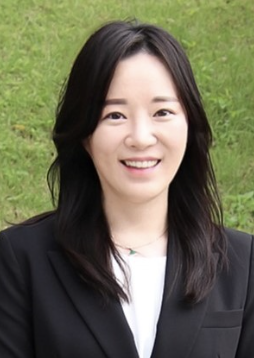
Ph.D. in Future Strategy, Korea Advanced Institute of Science and Technology (KAIST)
Education (학력)
- Ph.D. Korea Advanced Institute of Science and Technology (KAIST), Future Strategy
- Thesis Title: “Network structure of state and non-state actors in evolving international security environment.” - M.A. Korea Advanced Institute of Science and Technology (KAIST), Future Strategy
- B.A. Hanyang University, International Relations
Fields of Interest (연구관심분야)
- Sustainable management, green innovation & management, circular economy
Experience (경력)
- Global Circular Economy Center, Hanyang University, Research Assistant Professor
- Center for Energy Governance and Security, Hanyang University, Senior Researcher
- School of International Studies, Hanyang University, Full-time Lecturer
- Science and Technology Policy Institute, Researcher
- Center for Future Strategy of KAIST, Researcher
Recent Publications (최근논문)
- Lee, H., Im, J., Cho, H., Jung, S., Choi, H., Choi, D., ... & Kwon, E. E. (2024). Hydrogen production from fishing net waste for sustainable clean Fuel: Techno-economic analysis and life cycle assessment. Chemical Engineering Journal, 148741.
- Choi, H., Choi, M., & Yang, J. S. (2022). Longevity of Partnering Terrorist Organization: An Empirical Study Using A Network Diffusion Model. Terrorism and Political Violence, 1-16.
- Heo, K., Lee, D., Seo, Y., & Choi, H. (2020). Searching for Digital Technologies in Containment and Mitigation Strategies: Experience from South Korea COVID-19. Annals of global health, 86(1).
- Lee, D., Heo, K., Seo, Y., Ahn, H., Jung, K., Lee, S., & Choi, H. (2020). Flattening the curve on COVID-19: South Korea’s measures in tackling initial outbreak of coronavirus. American journal of epidemiology.
- Choi, H., Woo, H., Kim, J. H., & Yang, J. S. (2019). Gravity model for dyadic Olympic competition. Physica A: Statistical Mechanics and its Applications, 513, 447-455.
Working Papers
- Choi, H., Kim T., Son, H., Kim, D., Park, K., and Roh, T., How does consumer awareness of WEEE affect reverse logistics? Extended triple bottom line approach, Energy & Environment
- Choi, H., Lee, M., and Roh, T., Dual role of regional innovation intermediaries for SMEs in South Korea: Institutional pressures on green business model innovation, Technological Forecasting and Social Change
- Lee, J., Choi, H., and Kim, J., Environmental and economic impacts of e-waste recycling: a systematic review, Chemical Engineering Journal
- Choi, H., Yang, J., Structural Impact of Terrorist Group Alliance Network on Longevity, Studies in Conflict & Terrorism
- Kim, J., Park, W., Park, G., Choi, H., Lee, T., Jung, S., Tsang, Y., Park, Y., and Kwon, E., Addressing two global challenges with one insect, Nature Sustainability
Selected Projects (산학협력)
- New Enactment of domestic laws in major countries in accordance with global regulations on EU supply chain due diligence guidelines and battery regulations, LG Energy Solution, May. 2023 - Dec. 2023.
- 2022/23 Knowledge Sharing Program (KSP) with Cuba: Productive transformation of the industry in harmony with the environment in Cuba, KOTRA, Feb. 2023 - Aug .2023.
- Feasibility analysis and business model development on green hydrogen and renewable energy of Latin America, Korea Electric Power Corporation (KEPCO), Sep. 2022 - Apr. 2023.
- Global energy technology and policy convergence program for carbon neutrality, Korea Institute of Energy Technology Evaluation and Planning (KETEP), Jul. 2022 - Mar. 2027.
- Human resource development project in circular remanufacturing industry, Korea Institute of Energy Technology Evaluation and Planning (KETEP), Apr. 2021 - Dec. 2025
- 2020/21 Knowledge Sharing Program (KSP) with Albania: Gas sector expansion strategy for energy diversification in Albania, Korea Development Institute (KDI), Dec. 2020 - Sep. 2021.

Ph.D. in Museum Studies, University of Leicester
Education (학력)
- Ph.D. University of Leicester, Museum Studies (Cultural Diplomacy) 2020
- Thesis Title: Curating Culture, Exhibiting Nation: The Development of South Korea’s Cultural Diplomacy and Korean Exhibitions in ‘Universal’ Museums - M.A. University of Manchester, Museum Studies 2012
- B.A. University of California Berkeley, History (Culture) 2010
Fields of Interest (연구 관심분야)
- Cultural Diplomacy/International Cultural Relations, K-Culture, Global Content Convergence
Experience (경력)
- 2024–present. Hanyang University, Assistant Professor
- 2020–2024. Hankuk University of Foreign Studies, Adjunct Professor/Lecturer
- 2012–2014. Curatorial fields: The Manchester Museum, National Folk Museum of Korea, National Museum of Korean Contemporary History
Selected Articles (주요 논문)
2024
- Kim, S. (forthcoming). Interpreting Africa in South Korea: A Review of a Permanent Exhibition at the Museum of African Art. Museum Worlds: Advances in Research, 12.
- Kim, S. The British Museum’s Korean Gallery: A Space Embodying South Korean Cultural Diplomacy in the 1990s. Cultural Trends, 33(1), 52–67. DOI: 10.1080/09548963.2022.2115338
2022
- Kim, S. The Metropolitan Museum of Art’s Korean Collection: Historical Changes in Collecting, Exhibition, and Management. World History and Culture, 64, 305–328.
2021
- Kim, S. Analysis of Hybe Insight’s BTS Exhibition Content from the New Museology Perspective. Journal of the Korean Entertainment Industry Association, 15(8), 193–202.
- Kim, S. Changes in the Curatorial Agent and Interpretation of Korean Objects in Overseas Museums: A Case Study of a Moon Jar at the British Museum. Journal of Museum Studies, 41, 77–99.
- Kim, S. The “Inbetween-ness” of the Korean Gallery at the Musée Guimet, Paris. Museum Worlds: Advances in Research, 9, 203–207.
Working papers (international)
- KF XR Gallery; Hallyu in cultural branding; global K-pop exhibitions; user-generated K-content on social media.
Book Publication (저서)
- Kim, S. 2025 (forthcoming). Museums and South Korea’s Cultural Diplomacy, Routledge.
- Kim, S. 2025 (forthcoming). From Korean Identity to K-Identity: The Interpretation of K-ness in Global K-Culture Exhibitions (Chapter in Lee, S. ed., From Koreanness to K-ness: Contemporary Korean Language, Culture and Society, Routledge).
Selected Project (주요 산학협력)
- 2024–2027 Digital Governance and Management of Inclusive Museums for Social Sustainability in US, UK, France, Italy (National Research Foundation of Korea, 인문사회공동연구)
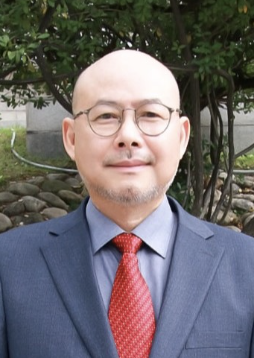
Ph.D. in Law, Chinese Academy of Social Sciences
Education
B.A. in Economics, Korea University (1989)
M.A. in Law, Chinese Academy of Social Sciences (2004)
Ph.D. in Law, Chinese Academy of Social Sciences (2007)
Professional Experience
National Assembly Secretariat (1989–2000)
Research Professor, Institute of Chinese Studies, Hanyang University (2008–2013)
Assistant Professor, Graduate School of International Studies, Hanyang University (2013–2019)
Associate Professor, Graduate School of International Studies, Hanyang University (2019–present)
Director, Institute of Chinese Studies, Hanyang University (2021–present)
Research Areas
Chinese politics, political thought, ancient Chinese political institutions and culture, Chinese economy
Selected Publications
The Study on the New Structure of Global Energy Politics and Foreign Petroleum Strategy of China (Ph.D. dissertation, 2007)
“Exploring the Influence of Traditional Cultural Factors in Chinese Diplomatic Negotiations” (2009)
“Traditional Chinese Negotiation Skills and Modern Diplomatic Negotiation” (2010)
“Cultural Conflicts and Changes in Perceptions of China among Long-term Korean Residents in China” (2010)
“An Evaluation of the Functional Transition of Township Governments after the Abolition of Agricultural Tax in China” (2010)
“Exploring the Elements of Traditional Political Culture in Contemporary Chinese Authoritarian Politics” (2012)
“A Historical Study on the Relationship Between Traditional Chinese Intellectuals and Political Power” (2012)
“Changes in Township Governance in Post-Agricultural Tax China” (2015)
“Application of the Chinese-Style Women’s Quota System” (2015)
“Urban Planning and Residential Environment Changes in Beijing” (A&HCI)
“Development Strategies According to Industrial Specialization in China’s Belt and Road Hub Cities” (2016)
“A Study on Regional Development and Industrial Characteristics of the Beijing–Tianjin–Hebei Urban Cluster” (2017)
“The ‘Strategic Group’: A Study on the Behavioral Mechanism of Chinese Township and Village Leaders” (2018)
“China’s Maritime Silk Road and the Construction Strategy of the Marine Logistics Network” (2018)
“China’s Maritime Silk Road and Port Network Strategy” (2019)
“Vietnam and the Philippines’ Responses to the U.S.–China Gray Zone Competition in the South China Sea” (2021)
“Relationship Between Vaccination in COVID-19 and the Number of Patients and Severe Cases in the Republic of Korea from a Financial Risk Transmission Perspective: An Analysis Based on VAR Model” (2022, SCI)
Selected Books
Negotiation is Culture (co-authored, 2011, Koryowon Books)
Chinese Tradition and Modern China (co-authored, 2012, Sum & Sum)
Korea–China Relations and Cultural Exchange: Cultural Conflicts and Adaptation Among Long-term Residents in Both Countries (co-authored, 2013, Imagine)
East Asian Common Prosperity and Peace on the Korean Peninsula (co-authored, 2019, Hanul Academy)
Eurasia and the Belt and Road Initiative: Integration, Cooperation, and Conflict (co-authored, 2019, Hanul Academy)
China and ASEAN I: Duality of Tension and Cooperation (co-authored, 2022, Hanul Academy)
China and ASEAN II: Interdependence and Economic Cooperation (co-authored, 2022, Hanul Academy)
Academic Activities
Chair, Chinese Politics Research Association (2017)
Secretary-General, Modern Chinese Studies Association (2009)
President, Modern Chinese Studies Association (2024)
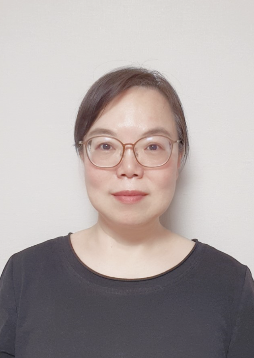
Ph.D. in Literature, Hankuk University of Foreign Studies
Education
B.A. in Literature, Nankai University (June 1991)
M.A. in Literature, Nankai University (June 1994)
Ph.D. in Literature, Hankuk University of Foreign Studies (February 2002)
Professional Experience
Full-time Lecturer, College of Chinese Language and Culture, Nankai University (1994–1996)
Native Lecturer, Department of Chinese Language and Literature, Soonchunhyang University (March 1998 – February 2002)
Visiting Professor, Department of Chinese Studies, Graduate School of International Studies, Hanyang University (March 2002 – February 2008)
Associate Professor, Department of Chinese Studies, Graduate School of International Studies, Hanyang University (March 2008 – present)
External Activities
Interview Examiner, International Chinese Language Teacher Qualification Examination (2016–present)
President, Nankai University Korean Alumni Association (2016–present)
Advisory Committee Member, Public Language Translation Advisory Board, National Institute of Korean Language (2021–2024)
Research Areas
Chinese linguistics, language and society, history of Korea–China cultural exchange
Selected Publications
"A Study of the Vocabulary of Lao Qida" (Chinese Studies, 2003)
"Changes in Several Word Groups Related to ‘Buy and Sell’ in Lao Qida" (Studies in Chinese Studies, 2004)
"An Analysis of the Structure ‘Hen + Adjective’ and Its Korean Translation from the Perspective of Second Language Teaching" (Chinese Language Education and Research, 2012)
"An Exploration of Noun and Measure Words in Pak Tongsa Eonhae" (Chinese Studies, 2013)
"A Study of Titles in Four Editions of Lao Qida" (Journal of Sino-Korean Studies, 2016)
"A Brief Discussion on the Measure Words ‘Pi’ (匹) and ‘Zhi’ (疋)" (Chinese Studies, 2021)
"A Glimpse into the Evolution of Chinese Society Over the Past Decade Through the Generalization of Kinship Terms in Neologisms" (Journal of Chinese Language and Literature, 2021)
"A Study on Chinese Youth’s Views on Marriage Through New Vocabulary" (Journal of Humanities and Social Science Research, 2022)
"Changes in Chinese Restaurant Signboards in Jian-da (建大) China Street from the Perspective of Linguistic Landscape—Focusing on Signboards in Naver Maps from 2010–2022" (Chinese Language Research, 2023)
Selected Books
First Steps in Chinese, Dongyang Mun’go (2004)
Everyday Chinese, Rae&Culture Group Co. (2010)
Chinese Reading Practice, Sarimin (2012)
Advanced Free-talking in Thematic Chinese (4th revised edition), Chinese Bank (2015)
(Annotated Translation) Pak Tongsa Eonhae, Hakgobang (2012)
A New Retelling of Stories About the Chinese Language, China House (2016)
Academic Activities
Director, Korean Association of Foreign Language Education
Director, Korean Chinese Language Education Association
Director, Chinese Studies Research Association
Director, Korean Association for Chinese Linguistics
Honorary President, Korean Chinese Studies Association
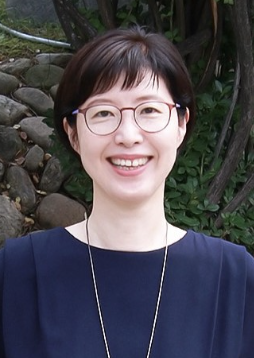
Ph.D. in Applied Linguistics, Oklahoma State University
Education
2009: Ph.D. in Applied Linguistics, Oklahoma State University, USA
Professional Experience
2010–2017: Assistant Professor, Global Business Culture, College of Humanities, Hanyang University
2018–Present: Associate Professor, Korean Studies, Graduate School of International Studies, Hanyang University
Research Areas
Language socialization, cultural studies, the Korean Wave (Hallyu), and language teacher education
Selected Publications
Yun, S. (2019). “Social meanings and functions of being global K-pop fans.” The Journal of Cultural Exchange, 8(1), 5–24.
Yun, S. (2019). “An ethnographic case study on characteristics of English for fire and emergency management purposes in a risk assessment course.” Journal of Learner-Centered Curriculum and Instruction, 19(6), 1117–1141.
Yun, S. (2017). “A study of language use during meditation practice and educational implications.” Korean Society for Holistic Convergence Education, 21(4), 63–86.
Yun, S. (2015). “An exploratory needs analysis of English for fire and emergency management.” Modern English Education, 16(3), 163–183.
Yun, S. (2014). “Critical issues in reflective teaching practices: A case study of twelve Korean in-service English teachers.” English Language and Literature Teaching, 20(1), 219–242.
Yun, S. (2014). “The effects of peer review of oral presentations in a freshman English course.” Journal of Learner-Centered Curriculum and Instruction, 14(3), 147–168.
Yun, S. (2014). “Teaching and learning in a university English-mediated course in multicultural and multilingual settings.” The Journal of Human Studies, 33, 171–194.
Choi, T., & Yun, S. (2012). “English and Chinese speaking strategies of Korean university students.” Foreign Languages, 19(4), 53–77.
Yun, S. (2012). “‘YOUR MAMA’ routine among preadolescent Korean boys in America.” The Sociolinguistic Journal of Korea, 20(2), 313–341.
Yun, S. (2012). “Constructing multilayered identity through code-switching: Differences between girls and boys.” The Journal of Korean Applied Linguistics, 28(4), 73–99.
Yun, S. (2012). “Students’ perceived learning outcomes through writing activities in an EFL university writing course.” Modern English Education, 13(3), 21–38.
Academic Activities
Hallyu (Korean Wave) Research Center
Korean Association for International Cultural Exchange Studies
Sociolinguistic Society of Korea
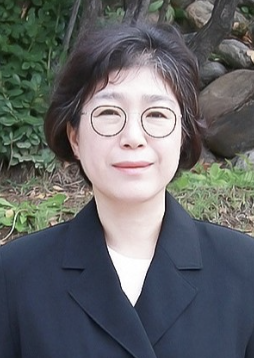
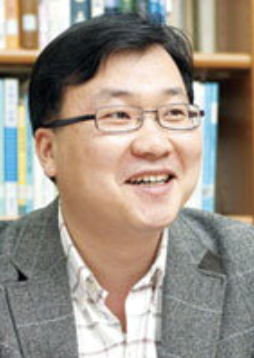
Emeritus faculty
Education
B.A. in Political Science and International Relations, Hanyang University (1980)
M.A. in Political Science, 臺灣 復興崗 政治硏究所 (Fuxinggang Institute of Political Science, Taiwan) (1985)
Ph.D. in Political Science, Graduate School of Hanyang University (1991)
Professional Experience
Academic Positions
Senior Research Fellow, Korea Institute for National Unification (1991–February 1995)
Visiting Professor, Department of Political Science, University of Oregon, USA (2006–2007)
Dean, Graduate School of International Studies, Hanyang University (August 2012–June 2016)
Director, Institute of Chinese Studies, Hanyang University (July 2008–February 2021)
Professor, Department of Chinese Studies, Graduate School of International Studies, Hanyang University (March 1997–February 2023)
Emeritus Professor, Graduate School of International Studies, Hanyang University (March 2023–present)
External Positions
President, Modern Chinese Studies Association (January–December 2009)
Policy Advisor, Ministry of Foreign Affairs and Trade (August 2004–July 2008)
Policy Advisor, Ministry of Unification (2015–2017)
Advisor, Northeast Asian Studies Foundation (2015–2017)
Outside Director, Korea Trade-Investment Promotion Agency (KOTRA) (March 2018–April 2020)
Private Advisory Member, Trade Negotiation Advisory Committee, Ministry of Trade, Industry and Energy (July 2018–December 2019)
Research Areas
Chinese foreign and security policy, U.S.–China relations, cross-strait relations, and North Korea–China relations
Selected Publications
“China–Japan Relations and the Taiwan Issue in Transition” (2006)
“China’s Latin America Policy and Sino–U.S. Relations” (2007)
“Sino–U.S. Relations and the Taiwan Issue: Focusing on U.S. Policy Toward Taiwan” (2008)
“China’s Perceptions and Policy Toward North Korea Under Hu Jintao’s Leadership” (2009)
“A Study on Negotiation Institutions and Practices in China and Taiwan” (2010)
“Strategic Cooperation Between China and Russia and the North Korean Issue” (2011)
“The 2012 Taiwan Presidential Election and Prospects for Cross-Strait Relations” (2012)
“China’s Power Strategy and Korea–Japan Relations” (2012)
“The Fifth Generation of Chinese Leadership and Cross-Strait Relations” (2013)
“Korea–China Strategic Cooperation and the Korean Peninsula Trust-Building Process” (2013)
“China’s North Korea Policy Under Xi Jinping: Selective Balance Between Alliance and Summit Diplomacy” (2014)
“The Re-Election of the Democratic Progressive Party and Prospects for Cross-Strait Relations” (2016)
“China–Russia Strategic Cooperation and the Korean Peninsula” (2018)
“Tsai Ing-wen’s Re-election and Cross-Strait Relations” (2020)
Selected Books
The Future of 1.3 Billion People: Is China Really One? (1996)
Modern Chinese Politics (co-authored, 2005)
China’s Foreign Strategy and the Korean Peninsula (2006)
The Taiwan Issue and Cross-Strait Relations (2007)
The Rise of China (co-authored, 2008)
Where is North Korea Headed? (co-authored, 2009)
Confucius Did Not Speak of Spirits (co-authored, 2010)
Proposals for a New Era of Korea–Japan Relations (co-authored, 2011)
Chinese Tradition and Modern China (co-authored, 2012)
History of Korea–Taiwan Relations, 1949–2012 (2015)
East Asian Common Prosperity and Peace on the Korean Peninsula (2019)
East Asian Co-prosperity Networks and Peace on the Korean Peninsula (2022)
Academic Memberships
Modern Chinese Studies Association
Korean Political Science Association
Korean Association of International Studies